Union Springs · Midway · Fitzpatrick
Bullock County Crane Certification, Studied on Your Own Time
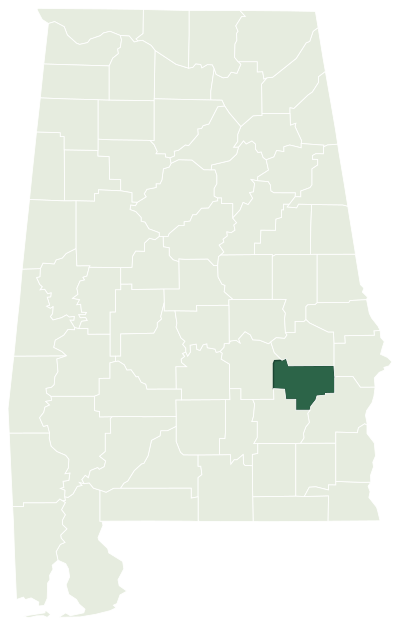
Bullock County is rural and agricultural, with fewer than 10,000 residents and an economy built around food. There are not many crane jobs on any single day, which is exactly why a national certification matters here: the operator or rigger who already holds one is the person who gets called when a plant expands or a contractor rolls through. You can prepare for the written exams from Union Springs without driving anywhere until test day.
Food plants are the crane customers
Business Alabama reports that poultry processing is Bullock County’s largest industrial employer, led by Wayne-Sanderson Farms in Union Springs. The plant has gone through production expansions, and the company bought adjoining property to grow further. Expanding a processing plant means new building shells, ammonia refrigeration equipment, rooftop air handlers and conveyor lines, which is steady work for operators and riggers.
Bonnie Plants runs a trial garden in Union Springs and is the other big agricultural name, and together the two companies employ close to one in ten county residents. In Fitzpatrick, To Your Health Sprouted Flour produces organic sprouted grains and flours for large commercial buyers. Grain bins, silos and processing equipment at facilities like that are set and serviced by crane.
Where to focus your study
Small-county work rewards versatility. An operator who can also rig and signal fills more roles on a short crew, and a utility lineman with a digger derrick card is useful to every co-op and contractor in the area.
If you are new to cranes, rigging and signaling are also the fastest way onto a lift crew, because contractors always need qualified hands on the ground even when they bring their own operator.
- Mobile crane operator: the core credential for plant expansions
- Rigger Level 1: basic hitches, sling angles and load control
- Signal person: standard hand signals and radio communication
- Digger derrick operator: setting poles on rural power lines
The legal picture in plain terms
There is no crane license from the state or from Union Springs. Federal OSHA covers private workplaces in Alabama, and on construction jobs it expects your certification to come from an accredited organization such as NCCCO, plus an evaluation by the company you work for. Riggers and signal persons need to be qualified as well. Public employees are a different case, since Alabama has no plan covering state and local government workers, so county and city crews should check their own employer’s policy.
Certification is good for five years. Recertifying takes a written exam, and with 1,000 hours of crane-related experience in that span the practical retest is waived. The Alabama requirements page explains each rule.
Getting to testing and handling the weather
Union Springs is in the Black Belt southeast of Montgomery, and most candidates head toward the Montgomery area or another larger central Alabama city for practical exams. The written portion can be done through online proctoring or at a computer test center.
Summers here are hot and sticky, with thunderstorms most afternoons in July and August. Black Belt clay soils hold water and lose strength when wet, so mats and careful outrigger placement are a must after rain. Spring tornado watches are common across the region.
Questions people ask
Is online exam prep useful if there are few crane jobs nearby?
Yes. Certification is national, so it travels with you to jobs in Montgomery, Columbus or anywhere else. Having it ready means you can say yes when a local plant expansion or out-of-town job comes up.
Do county road crews need crane certification?
Federal OSHA does not cover public employees in Alabama, so the requirement for county or city crews comes from their employer’s policy. Many public employers still choose national certification as their standard.
Do farm operations need certified operators?
Agricultural operations are treated differently from construction under federal rules, and many on-farm lifts are outside Subpart CC. Building a new grain facility or processing plant by contract is construction work, though, and that is where certification is expected.
How do I get started?
Fill out the enrollment form with the certification you want, and an enrollment advisor will reply with next steps.
Last reviewed · How we research these pages
Suggested prep for this area
-
Mobile Crane Operator
Self-paced study for the NCCCO mobile crane Core exam and the LAT, TLL and TSS specialty exams, organized around the hydraulic and lattice machines Alabama contractors actually rent and own.
-
Rigger I
Online written-exam study for the NCCCO Rigger Level I credential: the person who selects gear, inspects it and attaches routine loads whose weight and balance point are already known.
-
Signalperson
Self-paced preparation for the NCCCO Signalperson written exam, covering the standard hand signals, voice communication, crane behavior and the OSHA rules that decide when a signal person is required.
-
Digger Derrick
Online preparation for the NCCCO Digger Derrick Operator written exam, written around the storm-restoration and system-hardening work that keeps Alabama line crews busy.
Close by
Line up your crane exam prep for work in Alabama
Send us the card you need, whether that's operator, rigger, signal person or a recert, and the part of Alabama you work in. An enrollment advisor writes back with a matching course and the steps for booking your written and practical exams.
- Self-paced lessons that open on any phone or laptop
- Practice questions in the style of the NCCCO written tests
- Advice on where Alabama candidates set up practical exams
Ask about enrollment
A few short fields. Your details are used only to reply to you.